Bexar County slabs and crawl spaces
San Antonio Foundation Repair, Explained for Homes on Clay
Most foundation trouble here starts in the ground, not in the concrete. Clay under a house shrinks through a long, hot summer and swells when the fall rain comes, and the house rides along. This page covers what foundation repair in San Antonio usually involves, what the common signs mean, and what national guides say the work costs.
Foundation repair in San Antonio usually means piers under a slab that has dropped, new shims or supports under a pier-and-beam floor, or sealing cracks once the movement is handled. In Fixr's 2026 figures, an average job lands at $2,200–$8,200, slab work at $1,000–$10,000, and each pier at $1,000–$3,000. Those are national figures, not local quotes.
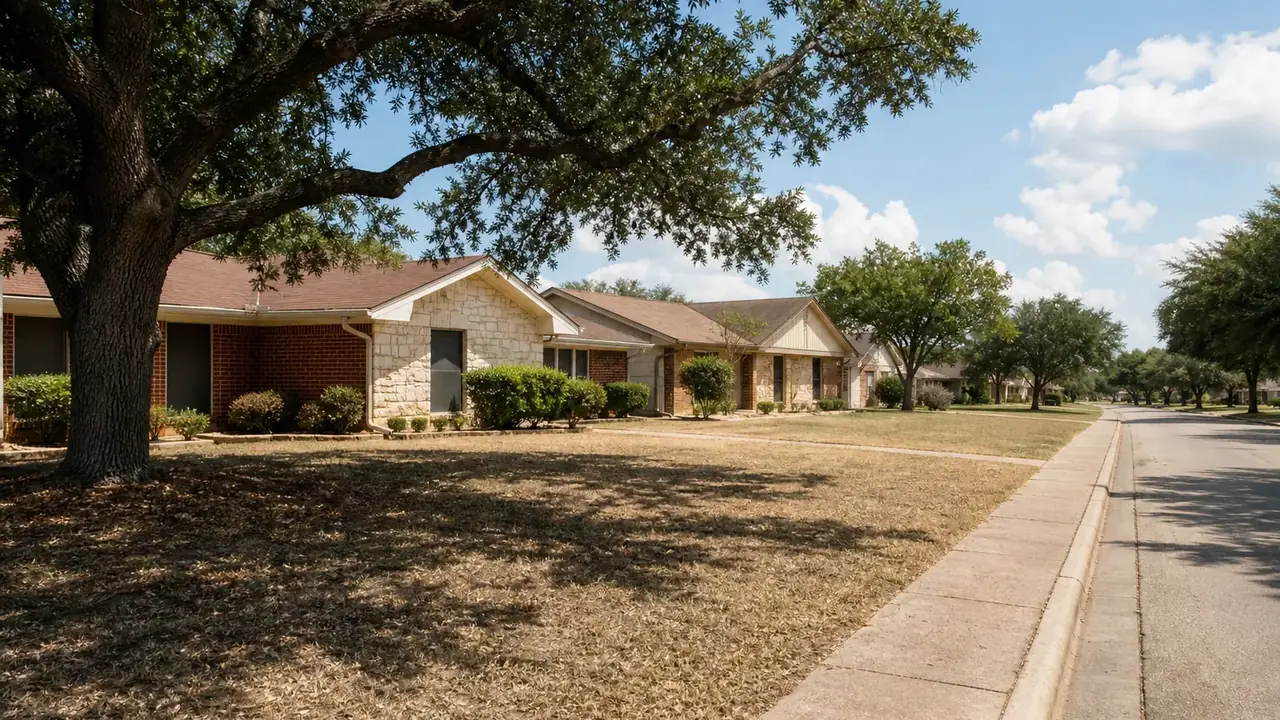
What does foundation repair in San Antonio usually involve?
Houses here sit on one of two foundations. A slab rests on concrete poured straight onto the ground, thickened into beams at the edge and under the main walls. A pier-and-beam house stands a foot or two up on short piers over a crawl space, with wood beams and joists carrying the floor. Both move when the clay moves; they just show it differently.
- A slab that has dropped at a corner or along one side: piers or pilings are pushed down to firmer ground and the low area is lifted back toward level. Many companies call this house leveling.
- Floors that sag or bounce over a crawl space: new shims, extra supports, or replaced beams and joists. See pier and beam repair.
- Cracks with no ongoing movement: sealing, repointing and patching, covered on the crack repair page.
The signs that usually start the search
Few people look up a foundation contractor out of curiosity. Something in the house changes first:
- a stair-step crack in brick climbing from the corner of a window;
- a diagonal crack in drywall above a door;
- a door that drags on its frame or won't latch;
- a floor that tilts enough for a marble to roll, or that bounces underfoot;
- a gap opening between baseboard and floor, or where a wall meets the ceiling.
One sign on its own often means little. Several together, or one that keeps growing, is worth having looked at. Our warning-signs page answers each of these in a few sentences.
Where to read next
- House leveling and slab piersPressed concrete pilings, steel piers, and what level really means after a lift.
- Pier and beam foundation repairSagging or bouncy floors over a crawl space: shims, added supports, new beams.
- Foundation crack repairBrick, drywall and slab cracks: which get sealed, which point to movement.
- What San Antonio foundation work costs in 2026Slab piers, pier and beam work, cracks and engineering, each with a named national range.
Clay, weather and warning signs
- San Antonio clay, drought and your slabWhat the county soil survey and a century of rain records say about house movement.
- What each foundation warning sign usually meansSticking doors, brick cracks, sloping floors and gaps at trim, each answered plainly.
Clay that shrinks in August and swells in October
San Antonio International Airport averages 32.38 inches of rain a year, and it does not arrive evenly. July and August bring only about 2.4 and 2.2 inches while average highs reach 94.9°F and 96.0°F, and the airport logs about 122 days a year at 90°F or hotter (NOAA 1991–2020 normals). September and October then average close to 3.9 and 3.8 inches. Expansive clay gives up water and shrinks through the hot stretch, often pulling back from the slab edge, then swells again once the fall rain soaks in.
Some years swing far harder than the averages. 2022 brought just 11.51 inches, the second driest year on record after 1917, while October 1998 delivered 18.07 inches in a single month (NWS Austin/San Antonio). The guide to San Antonio clay and drought explains what those swings do to a slab.
Older neighborhoods, newer subdivisions
About 43% of San Antonio's homes were built before 1980, while roughly 31% went up since 2000 (U.S. Census ACS 2020–2024). That spread shows up in the repairs. Older houses are more likely to stand on pier and beam, often with original wood beams and years of added shims, and their trouble tends to start with soft or sloping floors. Most newer houses sit on a slab, where the first clue is usually cracked brick or a door that suddenly drags.
How a request works
San Antonio Foundation Help is an independent local resource. We explain the signs and the typical costs; we don't do repairs. A request from this site is passed to one independent foundation specialist working in San Antonio and nearby communities such as New Braunfels and San Marcos, and that person rings you to hear what is happening and agree on a visit.
Ask about the permit before work starts: the City of San Antonio issues residential foundation repair permits over the counter, and a registered residential building contractor can pull one for you. Get a written scope naming the number and type of piers, and read any warranty terms before you sign.
Questions homeowners ask
What does foundation repair cost in San Antonio?
National guides are the only published yardstick. Fixr's 2026 middle band is $2,200–$8,200, and This Old House puts the average at $5,179. A single pier runs $1,000–$3,000. The San Antonio foundation repair cost guide lists each job with its source.
Does a crack in exterior brick mean foundation trouble?
Sometimes. Thin mortar cracks are common as brick and slab shift with the seasons. A stair-step crack that widens, starts at a window or door corner, or shows up alongside sticking doors inside points to slab movement. Pencil a line at each end with the date and check it every few weeks.
Should I water around my foundation?
Keeping soil moisture even around a slab is a common recommendation on expansive clay, since steady soil moves less. Use a soaker hose set back from the slab rather than flooding the bed, and check SAWS watering rules first: they group soaker hoses with sprinklers and change with the drought stage.
Is the first visit free?
It depends on the company. Many local specialists don't charge for the first visit; ask when they call, before they come out.
Sources
- Census Bureau ACS 5-year estimates 2020-2024, table B25034 (San Antonio city housing age)
- NOAA 1991-2020 U.S. Climate Normals (San Antonio International Airport)
- National Weather Service Austin/San Antonio: San Antonio area precipitation rankings
- City of San Antonio Development Services: residential permits
Have someone look at the house
Tell us what you have noticed and where: the crack, the door, the floor. One independent foundation specialist who works in San Antonio will phone you to talk it over and set a time to see it.