House Leveling in San Antonio: Piers Under a Settled Slab
When part of a slab drops, doors bind, brick cracks and floors tilt toward one side. House leveling in San Antonio usually means setting piers under the slab's beams and lifting the low area back toward level, so that part of the house stops riding the clay up and down.
Fixr and This Old House both put each pier under a settling slab at $1,000–$3,000 (2026). Fixr's 2026 guide puts slab repair at $1,000–$10,000 and fixing a sinking or unevenly settled foundation at $4,500–$25,000. The total depends mostly on how many piers the low area needs and whether any of them sit inside the house.
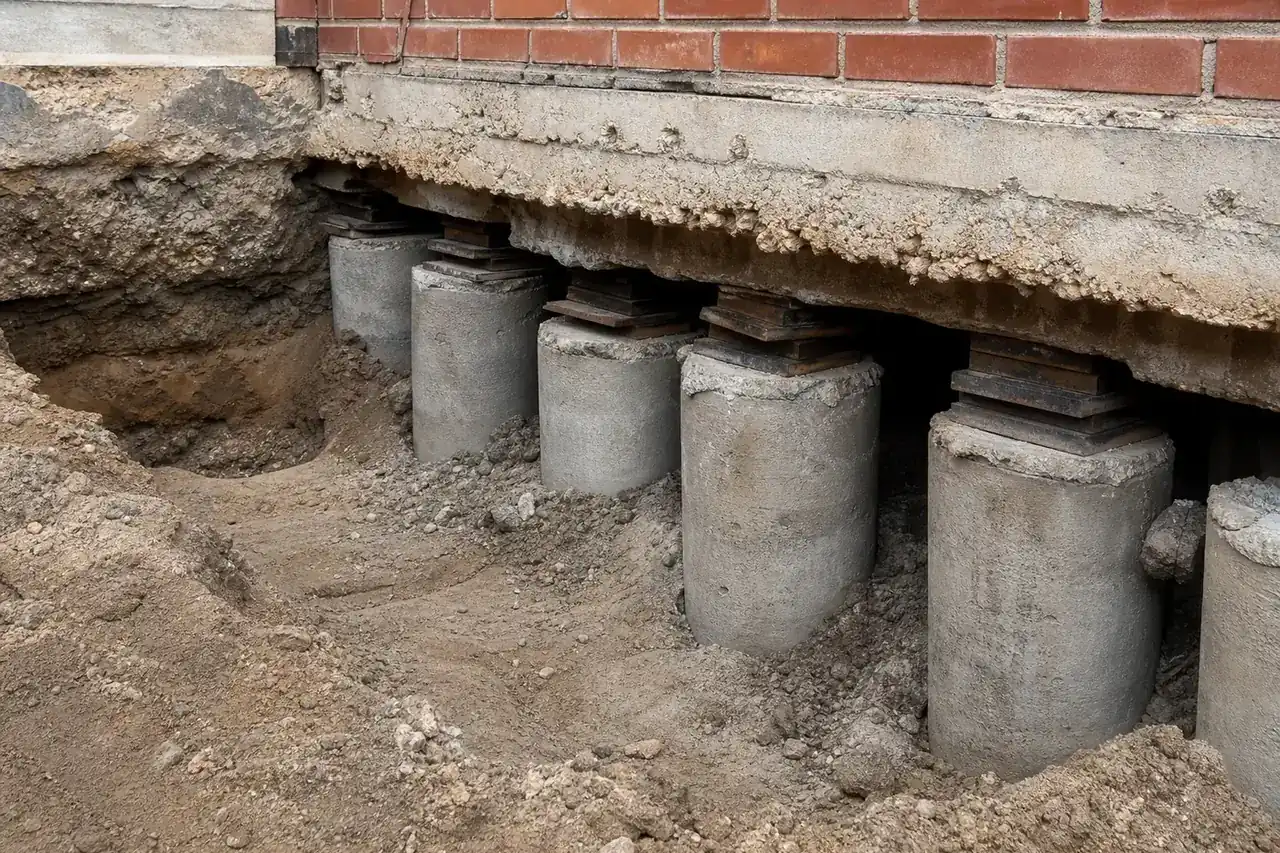
How does house leveling work on a slab?
Holes are dug beside the slab's perimeter beam at spaced intervals, wherever the floor has dropped. A pier is pushed straight down under the beam with a hydraulic jack until it stops going, which means it has reached ground firm enough to carry the house. With piers in place, jacks lift the beam a little at a time while someone watches the floor readings inside. The gap between pier and beam is filled with steel shims or a concrete cap, and the holes are backfilled. Settlement under the middle of the house calls for interior piers, reached through the floor or by tunneling in from outside.
Pressed pilings, steel piers or helical piers?
- Pressed concrete pilings are short concrete cylinders stacked and pushed down one on top of another. They are common under Texas slabs and usually the least expensive per pier.
- Steel push piers are pipe sections driven down using the weight of the house as resistance, and can reach deeper.
- Helical piers screw into the ground and suit lighter loads or spots where pushing is hard.
- Drilled concrete piers are poured into a drilled hole and take longer to install.
Whatever the type, ask what each pier is driven to and how the installer knows when to stop.
How level is level after house leveling?
Many slabs were never perfectly flat, even when new. A careful job starts with an elevation survey: readings across the floor with a laser or water level that show the high and low points. The aim is a practical level where doors close and floors feel right, not a perfect zero. Forcing an old slab all the way flat can crack it, so a good installer will say where they plan to stop. Ask for the before and after readings in writing.
Lifting can also strain the drain lines under the slab. Ask whether a plumbing test is done before and after.
Before anyone lifts the house
The City of San Antonio lists foundation repairs among the residential permits it issues over the counter, so ask who will pull it. The ground is the reason so many slabs here need this work: the NRCS rates about 92% of rated Bexar County soil acreage as limited for homes on a concrete slab (USDA NRCS). The clay soil and drought guide explains why, and the per-pier price table for San Antonio homeowners shows what each piece of the job tends to cost.
Questions homeowners ask
Will leveling close the cracks in my brick and drywall?
Some narrow as the slab comes up, but most will not close completely. Brick repointing and drywall patching are separate jobs, usually done after the house has been lifted and has had time to settle. Ask whether cosmetic repairs are in the bid or left to you.
Have someone look at the house
Tell us what you have noticed and where: the crack, the door, the floor. One independent foundation specialist who works in San Antonio will phone you to talk it over and set a time to see it.