National guides, 2026 edition
San Antonio Foundation Repair Cost: 2026 Ranges by Job
A slab that dropped two inches at one corner and a house that needs piers all the way around are different jobs with very different bills. This page sets out the national foundation repair cost bands for each kind of job, names the guide behind every number, and shows how to read a San Antonio bid against them.
Fixr's January 2026 guide puts a typical foundation repair at $2,200–$8,200, averaging $5,200, and This Old House reports an average of $5,179. By job: $1,000–$3,000 per pier, $1,000–$10,000 for slab repair, $2,000–$15,000 for pier and beam, and $200–$1,000 to seal a crack. All are national ranges.
Published ranges, job by job
| Job | National range | Source | Price driver |
|---|---|---|---|
| Average-size foundation job | $2,200–$8,200 | Fixr | Foundation type; how many piers |
| Repairing a slab foundation | $1,000–$10,000 | Fixr | How much of the slab has dropped |
| Pier (steel, concrete or helical), each | $1,000–$3,000 | Fixr; This Old House | Depth to firm ground; access |
| Sinking or uneven settling | $4,500–$25,000 | Fixr | How many corners or sides |
| Full underpinning or piering | $10,000–$40,000 | Fixr | Pier count around the perimeter |
| Pier and beam foundation repair | $2,000–$15,000 | Fixr | Reshim versus new wood |
| Leveling a sagging floor over a crawl space | $1,000–$5,000 | Fixr (2025) | Crawl space height; size of the dip |
| Support beam replacement, each | $1,500–$5,000 | Fixr (2025) | Beam length; rot nearby |
| Crack sealing or epoxy injection | $200–$1,000 | Fixr | Length; dry or still moving |
| Mudjacking or slab jacking | $500–$1,900 | Fixr | Area lifted; foam or cement slurry |
| Structural engineer report | $300–$2,000 | Fixr | Letter only, or a full design |
| Soil (geotechnical) report | $1,000–$5,000 | Fixr | Number of borings |
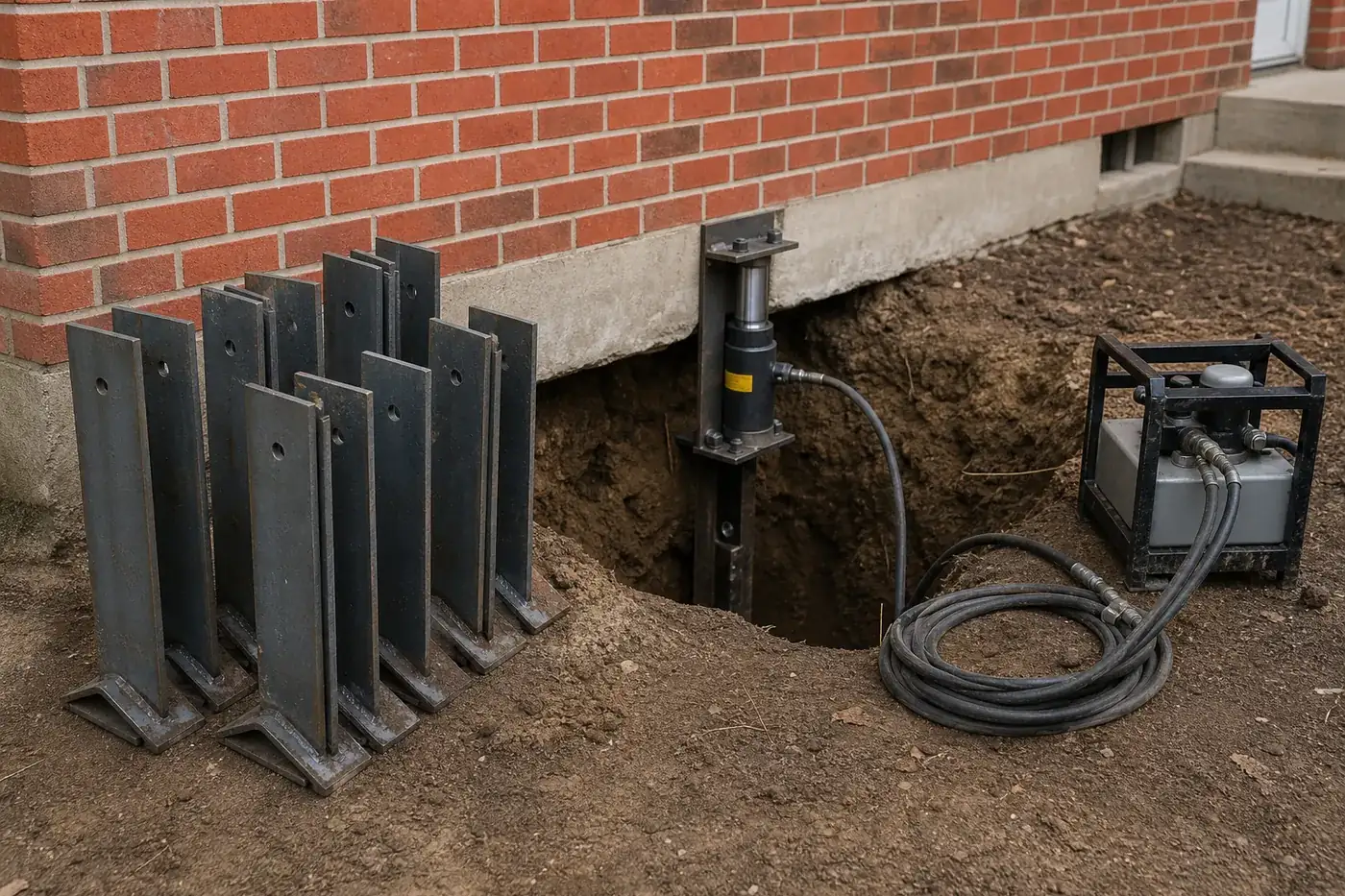
What drives foundation repair cost in San Antonio?
- Pier count. Most slab bids are built pier by pier, so a corner that needs six piers costs a fraction of a whole side that needs twenty.
- Slab or pier and beam. Crawl space work happens from underneath, much of it by hand. Slab work means digging beside the beam or tunneling under the house.
- Interior piers. Supports under the middle of a slab mean breaking through flooring or tunneling in.
- Depth to firm ground. Piers are pushed until they meet resistance, and deeper means more sections per pier. The NRCS cites high shrink-swell as a limitation for slab homes on about 83% of Bexar County's major soil acreage (USDA NRCS), which is why piers go past the layer that moves with the weather.
- Plumbing. Lifting a slab can strain drain lines underneath. Ask whether a plumbing test before and after is included, and who pays if a line is found broken.
- Engineering and the permit. An engineer's report and a City of San Antonio permit each add to the total.
Where these numbers come from
This site will not invent a local price. Fixr (updated January 2026) and This Old House (updated October 2026) both publish national bands, and their headline ranges nearly match: $2,200–$8,200 from Fixr, $2,224–$8,134 from This Old House. This Old House runs a little lower on small jobs, with crack filling at $250–$800 and an engineer's report at $500–$1,000.
One label needs care. This Old House lists foundation lifting and leveling at $20,000–$23,000, and Fixr lists house lifting at $20,000–$30,000. Those figures describe raising a whole house. In many slab bids, "house leveling" means something smaller: piers under the low part of the slab, priced one pier at a time.
Comparing two bids side by side
Check the same things on each bid. What type of pier, how many, and where, ideally on a sketch of the house. Whether elevation readings are taken before and after the lift. Who pulls the city permit (a registered residential building contractor can; a homeowner needs proof of ownership, per the City of San Antonio). Whether a plumbing test is included. What the warranty covers, for how long, and whether it transfers if you sell. A low total that leaves half of these out is not the cheaper bid.
Cost questions
Why does one company want eight piers and another twenty?
Usually they are solving different problems. One may be lifting only the corner that dropped; the other may be supporting the whole side to stop the next corner from following. Ask each to show their elevation readings and explain why each pier sits where it does.
Do I need a structural engineer before foundation repair?
Not always. For a single corner with clear settlement, many homeowners go straight to bids. For a house you are buying, bids that disagree, or a slab with cracks inside and out, paying an independent engineer (Fixr: $300–$2,000 per report) buys an opinion from someone who isn't selling piers.
Does homeowners insurance pay for foundation repair?
Standard policies commonly exclude settling and soil movement, though some cover damage from a sudden plumbing leak under the slab. Read the exclusions page of your policy, or ask your insurance agent, before counting on a claim.
Is pier and beam cheaper to fix than a slab?
Not by the national figures. Fixr's 2026 ranges are $1,000–$10,000 for slab repair and $2,000–$15,000 for pier and beam. A simple reshim is often cheap, but rotted beams, new supports and a tight crawl space push pier and beam work up quickly.
Have someone look at the house
Tell us what you have noticed and where: the crack, the door, the floor. One independent foundation specialist who works in San Antonio will phone you to talk it over and set a time to see it.